What Did You Do in the War, Daddy?
Blogger’s Note, December 6, 2017: Inspired by the Ken Burns Vietnam documentary (on public television, 2017), I decided to follow up on my “side note” below and have some of my slides digitized. By the way, I highly recommend Burns’ Vietnam series, very informative and revealing (and shocking). Scroll down to the link for the video (Vietnam: 1969-1970) newly added.
An alternate title for this might be, “What Did You Learn in the War, Daddy?” Hopefully I learned something.
Bruce Springsteen – The Summer of ’69
A Couple of Introductory Notes
It wasn’t that bad
I need to interject something before I go any further in this recounting of my Vietnam experience.
My Vietnam experience wasn’t that bad. There are veterans who endured much much worse, many who did not come back, or the ones who did come back were not the same physically and mentally as they were before the war. I’m not just talking about Vietnam vets, but also more recent wars – notice I said “wars” not “conflicts” – please give them all the credit they deserve. One more small favor, as a courtesy to a vet, whether you know them or not, don’t just say to them, “thank you for serving”. Although it may be well-intentioned on your part, most vets appreciate it more when you ask them for specifics, “where did you serve”, etc. In a way, it’s an insult to the vet, to just say “thank you for serving”, very perfunctory, kind of like a casual greeting to someone out of habit, “how are you”?
Back-story
I did serve in Vietnam, 1969-1970, more details on that to come. About 9 or 10 years later I put pen to paper (actually, this was before word processors, so I used an IBM Selectric typewriter) and started a kind of journalistic rehash of my year in Vietnam. That turned into 30 pages of double-spaced text. Later my Vietnam treatise joined the file with other discarded or dust-gathering manuscripts never to see a publisher. Finally after 30 plus years I dug it out and decided to do something with it, in the form of this blog. Some of the actual content in this blog is taken verbatim from what I wrote in 1979.
Side Note: I took tons of pictures in Vietnam, but unfortunately that was before digital, so I don’t have any of those Vietnam images to use unless I dig out the slides and convert them. Maybe later I’ll do that.
Vietnam: 1969-1970 (added video 12/6/17)
Finally (December 2017) I did convert them (well, I had them converted) . . . I give full credit to YesVideo who converted my 47-year-old, 35mm slides into digital images and added a music track, which I left up to them. I thought they did a great job.
I’ll let the video tell the story of my year in Vietnam. One short note about the pictures – they were taken with an old Minolta SR-1 that I bought from my roommate in Houston (pre-Vietnam) for $50. It was an unmetered camera, i.e., I had to use a separate light meter when I took pictures. One note about helicopter blades that are apparently stationary – not really true, they were almost always moving, but the sun was always so bright over there I used a shutter speed of 1/500sec for the majority of the pictures I shot.
I took many of the pictures in Saigon, aka Ho Chi Minh City, but the shipboard and village pictures were away from Saigon, some in An Thoi, a village on Phu Quoc Island. The APL moved around a lot while I was stationed on it, and An Thoi was the first stop for me in October 1969. In some of the An Thoi pictures, you’ll see strips of something drying in the sun, the villagers fished for shark and used the parts for many things. And yes, there is one picture of the not-quite-finished Sydney Opera House – I made two trips to Australia on R&R while I was over there. Another quick note – the man and woman in the opening picture I didn’t know and can’t identify them, but I liked the picture, taken in Houston.
Enough said, enjoy the show.
Vietnam: 1969-1970
A Brief Chronology
I’ll give you the first events leading up in my presence in Vietnam in a few bullet points before I recount what happened.
* 1967: I got drafted, but failed my induction physical thanks to an accident on my brother’s Honda motorcycle. During my temporary deferment, while I was healing, I enlisted in the Navy reserves. My thinking was that this would prevent me from serving in Vietnam. Hold that thought.
* 1968: I did my basic training in San Diego, received orders to go to Vietnam, and went back home to wait.
* 1969: I went back to California, to Coronado Island Naval Amphibious Base for Vietnam training. The training wasn’t bad, and we partied a lot. In October, after a brief trip home, I flew out of Travis Air Force Base to Saigon. Before my flight departed, my Dad said, “Keep your head down, son”. It was good advice.
* 1969: Wheels-down at Tan Son Nhut airport and off to my temporary in-country location in the city of Saigon.
Welcome to the War
Iron Butterfly – Inna Gadda Da Vida
The ungainly looking C-47 (military version of a DC-3) took off from Eighth Aerial Port at Tan Son Nhut and after a brief ride we landed on Phu Quoc Island, a long, narrow finger of land in the Gulf of Thailand (Gulf of Siam on some maps). The short runway was built by the Seabees and was made of metal interlocking grids that flexed and made noise under the weight of the plane.
As I stepped off the plane squinting my eyes into the bright, midday sun, I got my first heavy dose of Vietnam reality. There, squatting near the runway, were 60 to 70 pajama-clad figures in a circle surrounded by a dozen or so men with M-16’s. Both groups appeared to be Vietnamese, the helmeted MPs in green uniforms with their rifles held casually at their sides and the POWs in conical hats and black pajamas with expressionless faces. I found out later that the prisoners were on their way to a POW camp on the island.
Eric’s Apple
The ship I was assigned to was an APL – no name, just plain and simple “APL-21”. Everyone on board called it Eric’s Apple (APL) after the Officer in Charge whose name was Eric. Before I left the States for Saigon I made several fruitless inquiries about what an APL was and where An Thoi (the duty station) was located. Keep in mind, although the Internet did exist, accessing it was a bit different in those days. This misinformed situation, as you might imagine, was thoroughly disappointing since most sailors know way in advance what kind of ship they’re assigned to, whether it be destroyer, carrier, or garbage scow, and where the home port is located.
After landing and seeing the POWs, I grabbed a ride into the village, my ever-present sea bag in tow and my M-16, which, thank heavens I never had to use. I boarded an LCM (Marine Landing Craft) for the ride out to the APL anchored a few miles off shore. Except for the boat coxswain and a line handler, I was the only other person on board, which gave me the luxury of some privacy after having been in transit for so long. It was an opportunity to reflect on my current situation. However, my thoughts were soon interrupted by my first look at the APL-21, first from a distance, then up close.
The APL was moored next to a supply ship, the U.S.S. Tutuila. By comparison, the main deck of the APL was only about a third of the vertical distance from the Tutuila’s water line to her main deck, i.e. the APL was dwarfed by the supply ship. The APL-21, a converted World War II barge, could best be described as a floating ark made of metal instead of wood. In Navy terms, she was an Auxiliary Personnel Lighter, i.e. a barracks ship.
Circling the two ships to approach the stern, the LCM coxswain eased deftly alongside the APL. I nearly stopped in mid-step as I climbed out of the well deck and got a good look at the ship up close – it looked even worse from the stern. The fantail was cluttered with acetylene bottles, boxes, and mops hanging over the sides on the guardrails.
The men aboard were dressed in casually in tee shirts, dungaree pants, or jean cutoffs. Later, contrary to my first impressions, I found I liked the informality and lack of regimentation – kind of a McHale’s Navy. The APL had become my temporary home – for the next 12 months.
Did I tell you the APL was not self-propelled? Yes, the APL-21 was a vessel without propulsion. Hold that thought for future incidents in this story.
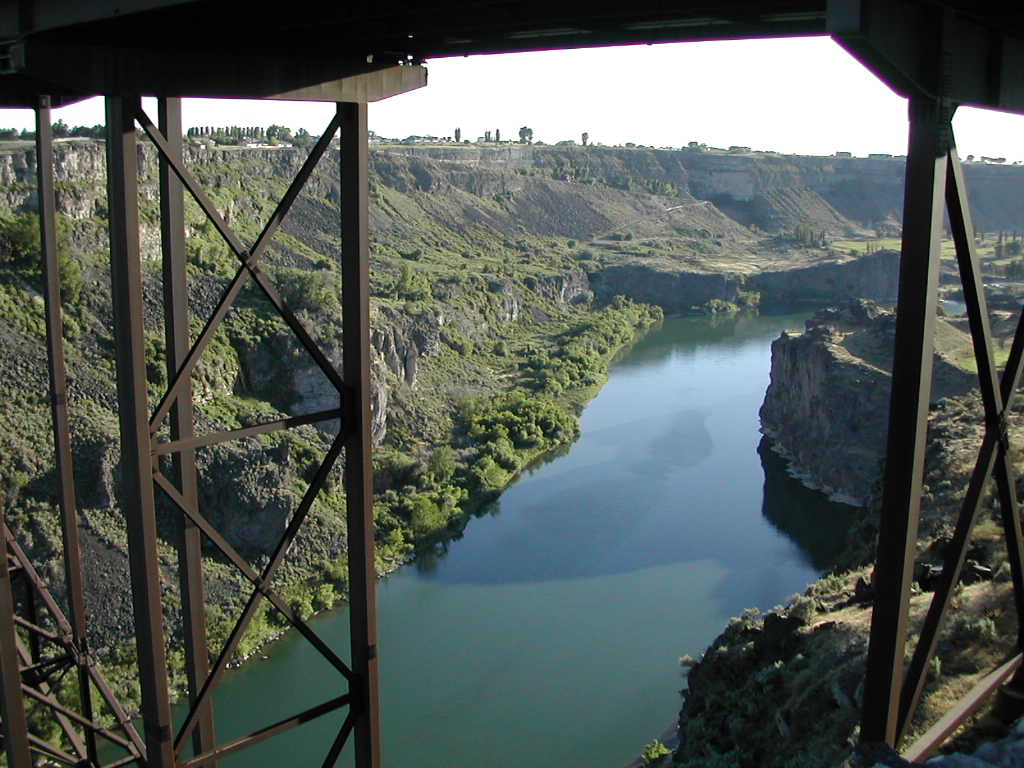
This isn’t the Mekong River.
What Did You Learn in the War, Daddy?
The first question is: what did I learn about time – was my perception of time different? Using my one-year tour of Vietnam as an example, here’s my take on it.
I think the passage of time that you perceive is relative to what you’re doing and where you’re doing it or at least “colored” by where you’re doing it. The where you’re doing it part is pretty easy to figure out – let’s say, you’re out of your normal element, in a foreign country or you’re staying with relatives out of state for an extended period. You’re not home surrounded by familiar faces and able to sleep in your own bed at night, etc.
For me, Vietnam was way out of my element, even discounting the physical distance from home, which at the time was Texas, but it was kind of like culture shock if you know what I mean. The humidity in S.E. Asia was much worse than I had expected and that’s compared to living in Houston – Houston has amazing humidity. The poor Navy guys wearing dress blues (wool) who got off the plane with me at Tan Son Nhut airport were really suffering in Saigon’s climate. I had come in from the West Coast and was wearing cotton whites, so not as bad, but I was sweating profusely too. What else affects your perception of time? Be patient, I’m getting there.
What you’re doing – how does that figure into the time perception? In this case, what I’m doing is . . . I’m on active duty in the Navy assigned to a duty station for a year doing “Navy things” as a seaman on the deck force, painting bulkheads (aka walls), sweeping and swabbing the decks, getting up in the middle of the night to secure the lines connected to the barges tethered to my ship, that kind of stuff. Obviously, this was much different than what I would do as a civilian at home in the good ole USA.
On the APL-21, my shipmates had these calendars with the number of days in little squares, maybe superimposed over a woman’s picture or a mosaic of squares making a picture of a woman, usually naked and with the very last day of their time in country in a very strategic location on the woman’s body – you can use your own imagination. So, every day at the end of the day they would X off another square on the calendar, take a deep breath, and say something like, I’m one day closer to being back in the world. I should probably explain “back in the world” (service men and women said this a lot); it might help you better understand the “time perception” part. “The world” was home, Redfield, South Dakota, Trenton, New Jersey, Houston, Texas, Buffalo, New York, San Diego, California, etc. Vietnam was not in the world, it was another place, another time, and we were all counting our days when we could return to our real world. Although our days in Vietnam were 24 hours long just like anywhere else, I hope that helps you understand why our time perception may have been different.
Friendships
The second question about living in Vietnam or anywhere where you’re isolated and far away from family and home friends is: does friendship, camaraderie, and teamwork make a difference (in the experience)?
In my opinion the answer is a definite yes – for example, take my friend David and me. He was a radioman and I was a yeoman on the APL, so our duties didn’t usually coincide. Well, except for inreps and vertreps, i.e. taking on supplies, which in that case meant all hands pitched in to get the supplies moved into the storage areas. He was a Midwest farm boy who always won the beard-growing contest. I never met anyone who could grow a beard as fast as David. In contrast, George was a tall, fair-skinned Scandinavian. He tried for weeks to grow a mustache, and then decided to shave half of it off – nobody noticed. He was crestfallen and never tried again.
Diversions and Tourist Attractions – Part I
David and I shared some common interests, one of which was skin diving. On the weekends when we were both off duty, we’d grab our snorkel gear and go over to the Third Island for the ship’s party. It was one way APL sailors could blow off steam. The Third Island was a small piece of real estate in the Gulf of Thailand near where our ship was anchored. The water was wonderful, clear and warm, and the coral reefs amazing. While the rest of the crew was on the beach playing football or roasting burgers and hot dogs, David and I were in the water enjoying the coral and the fish. One particular fish was a large grouper (sea bass) we named George. We pursued him on every trip to the island hoping to spear him and hand him over to the ship’s cook to serve to the crew. We were never able to get elusive George. I wonder if he is still alive (probably not) and how big he is if he is alive. More about the Third Island later. I want to tell you a liittle bit about life aboard the APL.
Life Aboard the APL
Since we were a barracks ship, our main function was to serve as a floating rest stop for the “swifties” and any other boat crews in the area. We provided berthing and mess facilities and repair supplies for the boats. If a boat got shot up and was salvageable, it was pulled out of the water on to a barge next to the Tutuila whose crew members patched her up. The boat patrols often lasted two weeks or more so the crews always appreciated a hot meal and a shower on the APL. We weren’t four-star rated, but no one seemed to mind.
The Swift boats were aluminum hulled vessels about 30 feet long, heavily armed, with a twin 50-caliber gun tub on top of the pilot house, grenade launchers, and assorted other personal weapons used by the crew. The aluminum hull made the vessel fast and lightweight for the shallow rivers, but it also made it vulnerable to ordnance used by the enemy. Ships and boats were the name of the game. Offshore there were Coast Guard cutters on station, in the rivers there were LCM’s (marine landing craft), junks used by the Vietnamese civilians, and the PBRs (river patrol boats), which were powered by Jacuzzi jet drive engines that allowed the boat to maneuver in very shallow water in the local streams. Also, there were RAG (river assault group) boats, low-slung, souped up runabouts with 409 cubic inch engines and an endless variety of converted landing craft with reinforced armor and pillboxes. They resembled the Monitor and Merrimack from Civil War days. I often wondered what creative and/or demented geniuses created some of the boats used in the war.
Did I say the APL was a “support” vessel, although all the other boats and ships were in a combatant role. I remember only one time when I held my loaded M-16 ready to fire (will tell you about that incident later), but I never once had to shoot anyone. No regrets.
Next: Part II of Diversions and Tourist Attractions
 blazinbernie
 Looking for a Rufous
October 16, 2019 at 4:57 am |
[…] By the way, I have to guide you down the music trivia path, just for a moment. If you read the first Vietnam installment I did, I included a song titled In-A-Gadda-Da-Vida. You should read this wikipedia piece about the […]
LikeLike
May 10, 2018 at 4:47 pm |
[…] happened almost 50 years ago, continues in this post. I invite you to start the Vietnam blog from the beginning, or you can just pick it up from here. I think the following eight-minute video tells the story […]
LikeLike
December 9, 2017 at 4:11 am |
[…] with Medicare enrollment, etc. So, I wanted to just tell you that I’m working on a new Vietnam blog, but, I’ll go ahead and introduce this BOTW series, which, ironically for a procrastinator […]
LikeLike
November 11, 2015 at 11:43 pm |
[…] What Did You Do in the War, Daddy? […]
LikeLike
August 6, 2015 at 5:39 am |
[…] What Did You Do in the War, Daddy? […]
LikeLike